Skip to content Skip to content
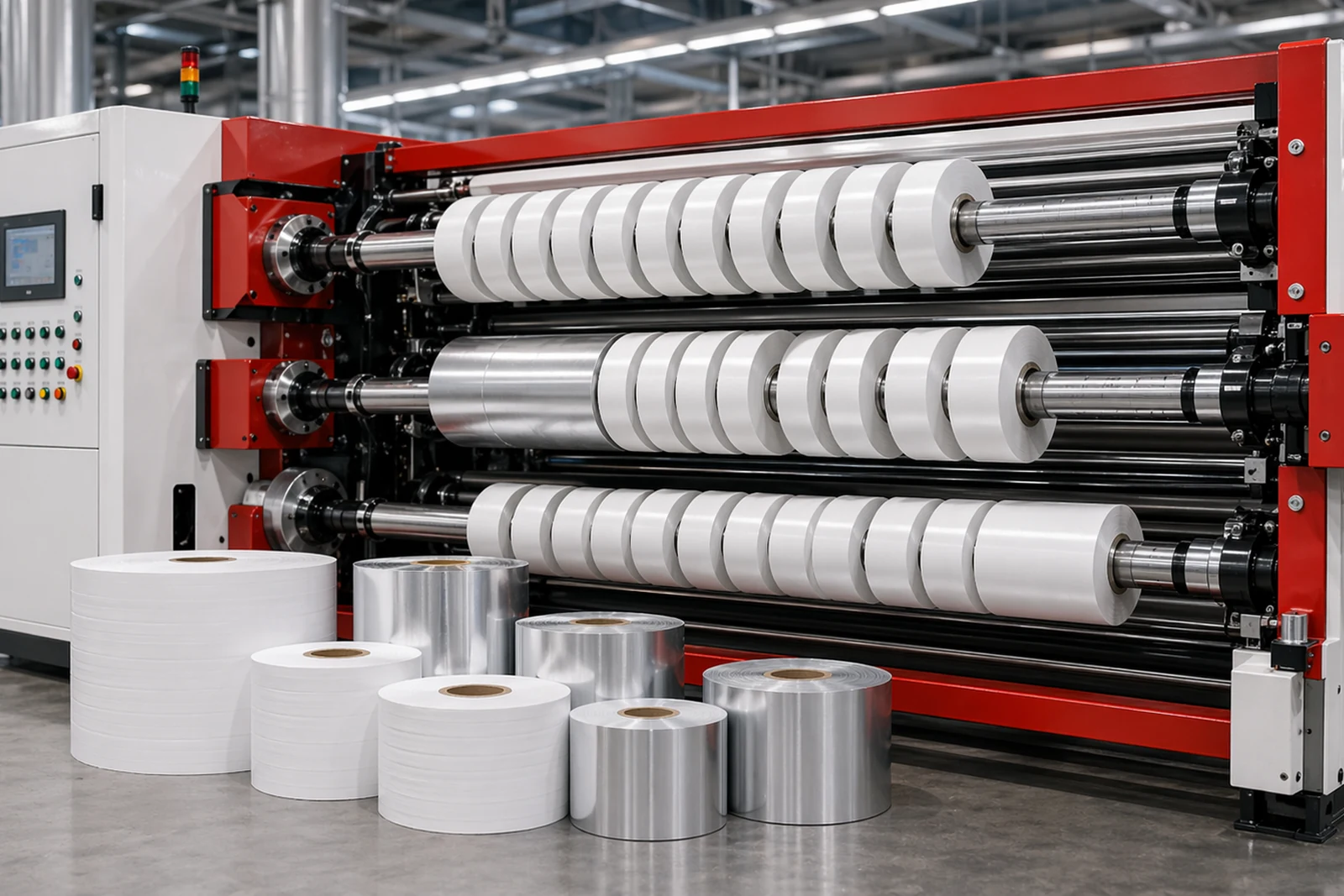
Capability review is where many industrial slitter rewinder projects either become clear or drift into weak quotation rounds. Two machines can look similar in a brochure, yet the real fit still depends on working width, thickness range, slit pattern, unwind and rewind diameter, edge-quality expectation, and the production problem that is actually driving the project.
Before selecting a configuration, confirm the material range and production requirements the machine must meet. Share any tight tolerances, mixed-material jobs, large roll sizes, or plant layout restrictions so we can assess the scope early.
Use this page to test technical fit before price discussion. A stronger capability review usually means fewer quotation revisions, better product routing, and faster alignment between procurement and engineering.
Ask for Capability Review Build the RFQ First View Machine Directions
What Capability Review Should Settle Early
Working Window
Review the real width, thickness, and diameter range that the line must support in daily production. A single nominal sample never tells enough about the actual machine direction.
Slit Pattern And Tolerance
The smallest width alone is not the job. Buyers should define the width mix, number of finished rolls, and tolerance expectation, because that combination changes setup logic and rewind arrangement.
Knife And Web Handling
Knife method, tension response, and contact path need to match the material behavior and finished roll expectations. These are often where weak capability claims start to break down.
Production Priority
Capability review should follow the commercial pressure behind the project: capacity growth, changeover efficiency, complaint reduction, or a broader application range. Different priorities point to different machine routes.
PVC Edge Banding Projects Need A Narrower Capability Lens
PVC edge banding is our main application focus. For these projects, we review narrow slit consistency, decorative finish protection, rewind hardness, and width changeover requirements alongside the full material and roll size range.
Use the PVC edge banding application page when the team needs the capability review framed by material behavior and production case. Move directly to the PVC Edge Banding Slitting Rewinding Machine page when the project is already defined around PVC production and needs product-level discussion rather than broad capability screening.
For a PVC project with a wide operating range or recurring defects, include details of the current knife setup, slit accuracy, tension behavior, and finished rolls. These details help identify the configuration questions that need closer review.
Precision, Knife Method, And Rewind Quality
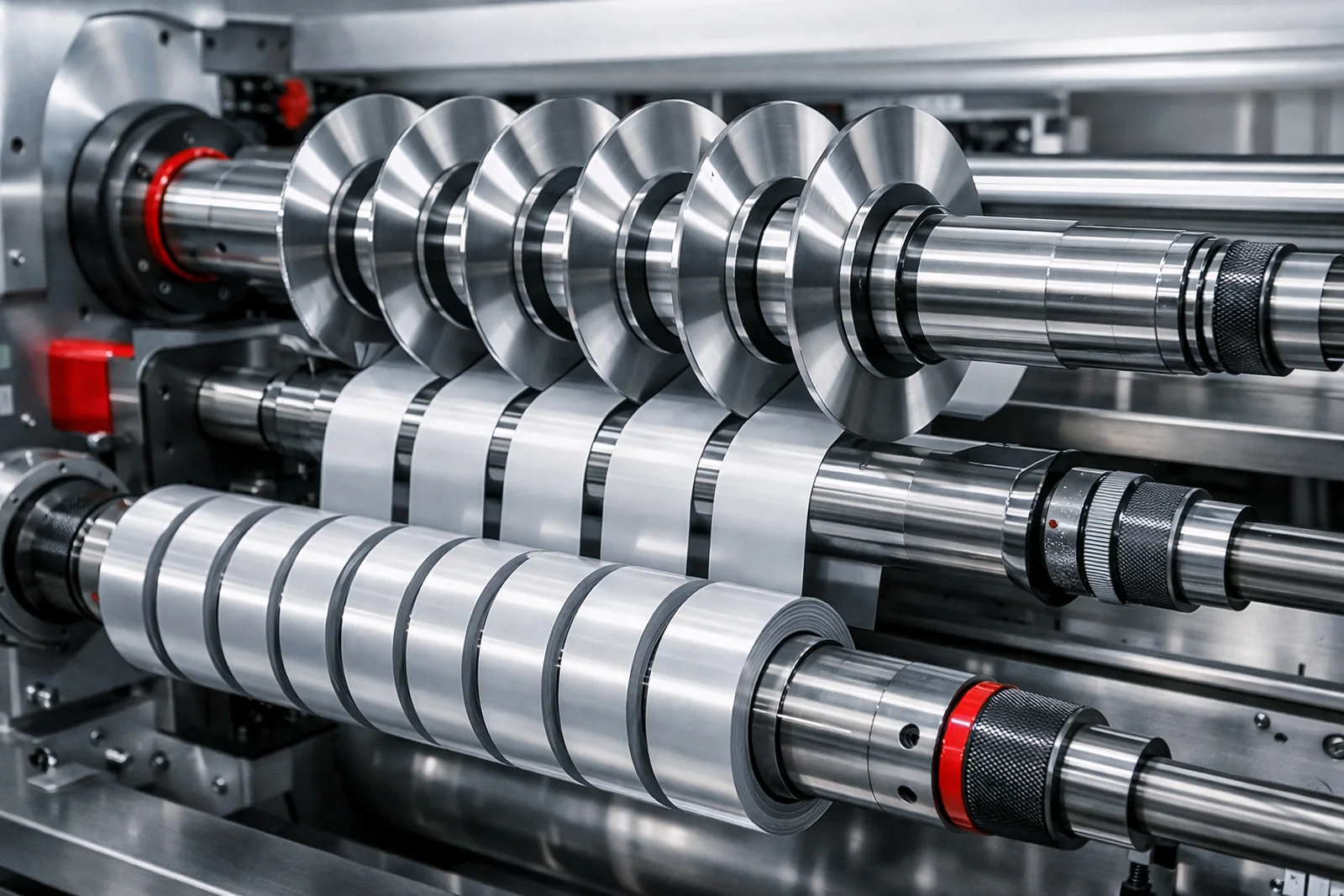
Capability review often becomes serious when the discussion moves away from brochure values and into edge quality, roll build, and process stability. A machine can claim the right width and speed and still be a poor match if the knife setup, web path, and rewind condition do not support the material and the finished roll target at the same time.
- Knife method: Shear, razor, and score choices should be judged against the actual material behavior, dust or burr tolerance, and the finished edge standard that downstream production expects.
- Tension control window: Stretch-sensitive or surface-sensitive materials often need a steadier control window than a general product comparison suggests.
- Finished roll build: Loose rewind, telescoping, roll hardness variation, and surface marking can matter more than top speed in real production.
- Setup repeatability: If the factory changes widths frequently, the usable capability is not only whether one setup can work once, but whether the line can repeat the setup with stable daily output.
That is why buyers should bring the current defect context into capability review. If the project is being pushed by burr, surface marks, unstable rewind, wrinkles, or width variation, those points should be stated before a machine route is treated as standard.
Have the dimensions, but still unsure whether the request is standard?
Use the popup inquiry now and frame the question around the hardest production condition. That gives the review enough technical direction without slowing the first contact step.
When A Standard Capability Window Is Usually Enough
A standard capability route is usually enough when the material family is stable, the slit pattern is repeatable, and the project is mainly about adding reliable production rather than solving a chronic defect problem. In those cases, capability review is still needed, but it is mostly confirming the real operating range instead of challenging the machine concept from the ground up.
- The factory mainly runs one material family or one narrow group of related jobs.
- The real width mix and roll dimensions are already known.
- The line is not being asked to cover an unusually wide thickness or diameter range.
- The commercial target is capacity, replacement, or faster changeover rather than difficult quality recovery.
- The plant layout does not force a special loading, unloading, or integration arrangement.
When Custom Discussion Should Start Earlier
Custom discussion should start earlier when the inquiry combines broad operating range with tight quality expectations, or when one machine is expected to cover a wider scope than a standard line usually handles. This is common in mixed-material programs, plants with difficult width variation, and projects where defect cost is the real driver behind the purchase.
- The project covers PVC together with other edge banding materials or a broader converting mix.
- The line needs narrow widths together with stronger edge-quality control or decorative surface protection.
- Large unwind or rewind diameters change handling, layout, or operator flow.
- The project needs add-ons such as inspection, static control, meter counting, trim handling, or special downstream integration.
- The inquiry is triggered by recurring complaints such as burr, wrinkles, scratch risk, telescoping, or unstable rewind hardness.
Include these requirements in your RFQ and identify any dimensions, tolerances, or plant constraints that are fixed. We can then review the configuration against your full production requirements.
Capability Review By Application
Capability review becomes easier when the machine discussion is tied back to the material family and the finished roll target. Use the application routes below when the production case is clearer than the final machine layout:
- PVC edge banding slitting capability review for decorative surfaces, narrow width consistency, and PVC-first converting projects.
- Film slitting and rewinding capability review for tension-sensitive webs, rewind quality, and broader film-converting jobs.
- Foil and paper roll slitting capability review for burr control, cleaner edges, and heavier roll-handling discussion.
Need the capability review to stay tied to quotation?
Send a brief description of your project and the main capability question. Use the RFQ guide to add your material, thickness range, roll dimensions, slit widths, and production targets.
What Procurement And Engineering Should Align On
Capability review works best when procurement, engineering, and production are sending the same operating story. When one side talks only about commercial targets and the other side keeps the key process limits offline, the quotation cycle usually drifts into repeated revisions.
- Procurement should state whether the project is replacement, expansion, or a new application line.
- Engineering should confirm which width, thickness, diameter, and tolerance values are hard limits instead of preferred values.
- Production should name the defect that matters most in daily output.
- Management should clarify whether the commercial priority is capacity, quality, changeover efficiency, or broader product coverage.
- The whole team should separate normal production from occasional edge cases so the machine is not over-scoped around one rare order.
Questions Buyers Should Use To Challenge Capability Claims
- Does the stated width range still hold your actual slit pattern mix? Maximum width alone is not enough.
- Does the quoted speed still hold the finished roll standard you need? Speed and roll quality are not interchangeable claims.
- Does a broad thickness range really use one stable knife and tension approach? Often it does not.
- Is the material-compatibility claim tested against the hardest material in the program? Easy samples can hide real risk.
- Does the standard claim still hold when decorative surfaces, narrow widths, or difficult rewind targets are involved? That is usually where capability language needs to be challenged.
Slitting Capability FAQ
Does a wider capability range always mean a better machine?
No. A wider stated range may help on paper, but capability should be judged against the actual material, slit pattern, and finished roll quality that matter in production. A broader range does not automatically create a better result.
Should capability review be built around the normal order or the hardest order?
Start with the hardest commercially meaningful order. If one demanding job is a normal part of the business, the review has to cover it. If it is only an occasional edge case, state that clearly so the line is not overbuilt around a rare event.
Why can two suppliers with similar width and speed claims still recommend different routes?
Because capability is not only about headline size. Different recommendations usually come from different assumptions about knife method, tension stability, rewind quality, width-change frequency, and how serious the current defect problem really is.
What is the next step after capability review?
Once the capability window is clear, the next useful step is a structured RFQ with the material, dimensions, slit pattern, and production problem that define the job. That moves the discussion from possibility to a usable recommendation.
Move From Capability Questions To A Usable Inquiry
Send your operating range, finished roll requirements, and main production concern. For PVC edge banding, include the decorative finish and usual width mix. For mixed materials, list each material separately so we can review the complete scope.
Send Your Slitting Requirements PVC Flagship Machine Contact GX Slitting