Skip to content Skip to content
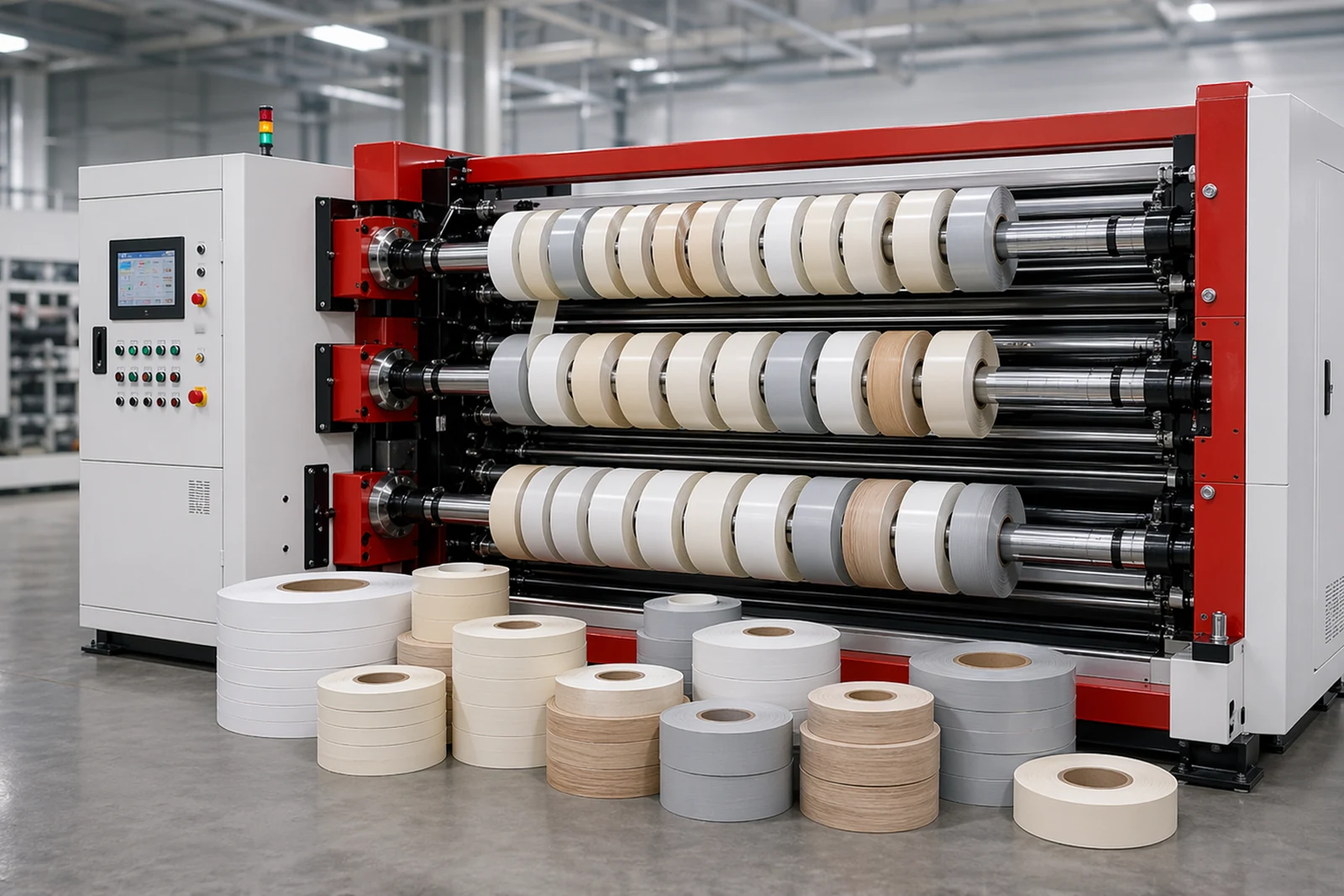
GX Slitting supplies industrial slitter rewinder machines for manufacturers and converters, with a focus on PVC edge banding. Compare your material, thickness range, finished widths, and roll sizes to identify a suitable machine configuration.
For PVC edge banding production, start with our dedicated slitting rewinding machine. If your project covers several edge banding materials, film, foil, or paper, send the complete material range so we can review the required knife system, tension control, and winding arrangement.
Use this page to choose the right product path before quotation. If the project is already defined around PVC edge banding, go straight to the flagship product page. If the team is still comparing material range, capability window, or RFQ readiness, use the sections below to narrow the route first.
Ask for a Quick Quote View PVC Flagship Machine Compare Applications
Choose The Right Product Route

Slitting Requirements for PVC Edge Banding
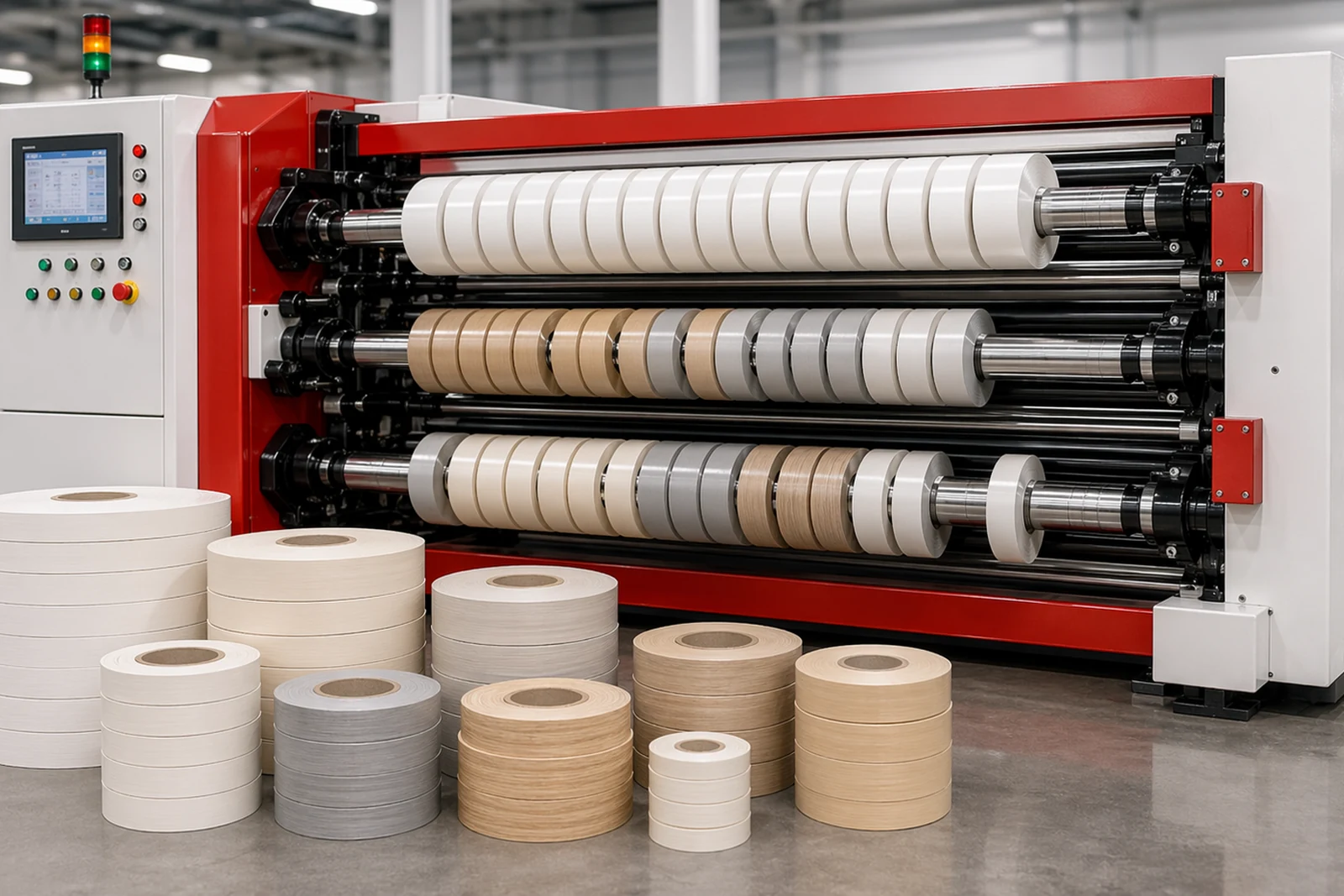
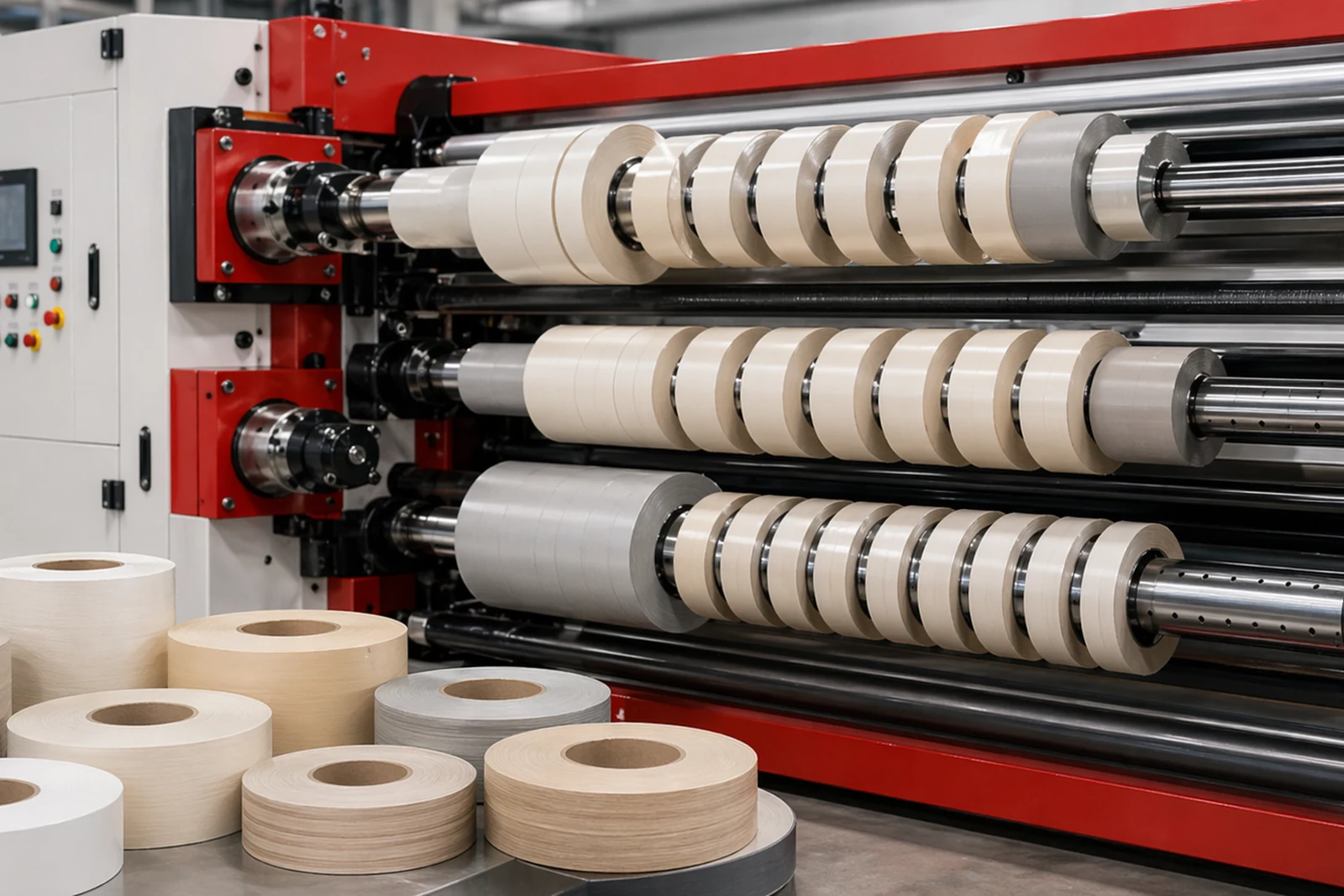
PVC edge banding production requires attention to finished width consistency, slit edge condition, decorative surface protection, and rewind quality. These requirements should be reviewed together with your thickness range and usual order mix.
Our PVC Edge Banding Slitting Rewinding Machine page covers the production details to review before quotation: slit width mix, thickness range, unwind and rewind diameters, and finished roll requirements.
Tell us whether you are adding capacity, replacing an existing line, or handling a new material range. For an existing production issue, include photos of the slit edge or finished rolls and describe the result you need to improve.
Already have PVC roll data or a width list?
Move directly from the product hub into the PVC page or send the first RFQ now. That shortens the quotation cycle and reduces the chance of a second clarification round.
What Changes The Final Machine Recommendation
Material Behavior
PVC edge banding, mixed edge banding materials, film, foil, and paper do not put the same pressure on knife method, tension response, and finished roll build. The more demanding the material behavior, the less useful a generic product comparison becomes.
Slit Pattern
The smallest finished width is only one part of the job. Buyers should define the real slit width mix, number of finished rolls, and changeover frequency, because that combination affects setup efficiency and rewind arrangement.
Roll Data
Parent roll width, maximum unwind diameter, rewind diameter, and roll weight all influence the practical machine layout. These points often move the recommendation more than a headline speed request.
Production Priority
Some projects are driven by output. Others are driven by burr complaints, surface marks, telescoping, loose rolls, or difficult changeovers. The recommendation should follow the production priority that creates the real commercial risk.
A useful machine comparison considers material compatibility, the full operating range, and the finished roll requirements together. Send these details with your production priorities so we can review the configuration and quotation scope.
When A Standard Machine Direction Is Usually Enough
A standard industrial slitter rewinder route is often enough when the material family is stable, the operating window is not too wide, and the project is primarily about adding capacity or improving day-to-day efficiency. In those cases, the inquiry can move forward quickly once the material, widths, roll data, and target output are clear.
- The plant mainly runs one material family or one narrow production window.
- The slit pattern repeats across regular orders instead of changing aggressively every shift.
- The finished roll quality target is known and does not involve unusual complaint history.
- The factory does not need a special loading, unloading, or integration layout.
- The commercial target is to add stable production capacity rather than solve a chronic converting defect.
When Custom Discussion Should Start Earlier
Custom discussion becomes more important when the buyer wants one machine to cover a broader material scope, when the quality target is demanding, or when the inquiry is driven by a recurring production problem rather than simple capacity growth. This is common in mixed edge banding projects and in factories that are trying to reduce waste or complaint cost, not just buy another line.
- The project covers PVC together with other edge banding materials or other converting jobs.
- The smallest slit widths or edge-quality limits are tight enough to make setup discipline critical.
- Large diameters, heavy rolls, or plant layout limits change the practical machine structure.
- The inquiry is triggered by defects such as burr, scratch risk, loose rewind, wrinkles, or telescoping.
- The line needs added functions such as inspection, static control, trim handling, or special downstream flow.
When those conditions are present, buyers usually get a better result by moving through Slitting Capabilities and the RFQ Guide before treating the inquiry like a simple product quote.
Need a quotation path that matches the real production problem?
Send your material, thickness range, roll sizes, slit widths, and the main production problem. The RFQ guide lists the supporting details that help us review your requirements.
What A Serious First RFQ Should Include
The best RFQs do not try to answer everything. They answer the production points that most quickly change the recommendation. For a slitter rewinder inquiry, that usually means enough information to define the converting window, the slit pattern, and the main production pressure behind the purchase.
- Material and structure: state whether the job is PVC edge banding, mixed edge banding, film, foil, paper, or another specific material family.
- Thickness range: give the real operating range, not only a single sample thickness.
- Parent roll width and unwind diameter: these define the unwind side and machine frame direction.
- Finished slit widths and rewind diameter: this is what turns a broad request into a usable product recommendation.
- Target output or running speed: share the production target that matters commercially.
- Main problem to solve: explain whether the project is driven by capacity, setup time, edge quality, roll quality, or complaint reduction.
If your team already has those six points, the inquiry can move directly into quotation. If not, use the RFQ Guide first and keep the product-page discussion focused on route selection rather than incomplete price comparison.
Industrial Slitter Rewinder Machines FAQ
Should I start with this products page or with the PVC page?
If the project is clearly PVC edge banding, start with the dedicated PVC page. Use this products hub when the route is still broad, when several material directions are being compared, or when the inquiry needs capability review before a narrower product page makes sense.
Can one machine cover several edge banding materials?
Sometimes yes, but the realistic answer depends on the most demanding material in the planned mix. A broader edge banding scope should be reviewed by slit quality target, operating window, and roll data rather than by a simple claim that several materials are possible.
What usually speeds up quotation the most?
Quotations move faster when the buyer provides material, thickness range, roll data, slit pattern, and the main production problem in the first message. That is enough to narrow product direction quickly and reduce repeated clarification.
When should I request a capability review first?
Request capability review first when the material route is not yet fixed, when a defect problem is pushing the project, or when the plant expects one machine to cover a wider operating window than a standard inquiry usually handles.
Move From Product Interest To A Usable Inquiry
Send your production requirements to GX Slitting for a configuration review. Include the full material range for mixed-material projects and identify any dimensions or output targets that are still under review.
Send Your Slitting Specs PVC Flagship Machine Contact GX Slitting