Skip to content Skip to content
A fast slitter rewinder quotation depends on the quality of the technical information you send. When the first RFQ already includes the main production dimensions, material details, and quality priorities, machine matching is faster, option gaps are smaller, and quote revisions are reduced.
Use the checklist and copyable template below to prepare your machine inquiry. Share the same requirements with your production, engineering, and purchasing teams so the quotation can be reviewed against a consistent specification.
If the project is still early and some values are not fixed, send the best current range instead of waiting for perfect numbers. A range-based RFQ is still far better than a message that only says “please quote slitter rewinder machine.”

Use this guide before sending your inquiry. A structured RFQ shortens the quotation cycle, reduces avoidable revisions, and gives procurement and engineering the same starting point.
Send Your Specs Now Check materials and applications Review capability points
Information You Should Include
| Item | Why it matters | What a useful RFQ looks like |
|---|---|---|
| Material name and structure | Changes knife method, tension control, and web path. | PVC edge banding, PET film, laminated film, kraft paper, foil laminate, and so on. |
| Thickness range | Helps confirm the working window and setup direction. | Minimum and maximum thickness instead of one nominal value. |
| Mother roll width and diameter | Sets the unwind side and frame requirement. | Actual parent roll width plus maximum unwind diameter. |
| Finished roll widths and diameter | Defines slit pattern and rewind arrangement. | Common slit widths, minimum finished width, and target rewind diameter. |
| Core size | Affects shaft choice and finished roll handling. | Current core size on unwind and rewind if they differ. |
| Target speed or output | Changes drive, tension response, and automation need. | Target line speed, daily output, or shift output. |
| Main problem to solve | Quality complaints can change the recommended configuration. | Wrinkles, burrs, telescoping, scratch marks, unstable rewind, or width drift. |
| Special options | Options change layout and quotation scope. | Inspection, meter counting, trim handling, automation, labeling, and similar needs. |
| Power or factory limits | Helps avoid layout revisions later. | Voltage, floor space, operator preference, or line integration limits. |
| Destination country | Supports quotation scope and delivery planning. | Country, port, or shipping preference. |
Useful Extras That Speed Quotation
- Material photos or a short production video
- Photos of current finished rolls and edge quality
- A slit pattern list for common orders, not only one sample width
- Notes about whether quality or speed matters more in the project
- Any current machine photos if you want to explain the existing setup
Why These Details Matter To Machine Matching
Every item in the RFQ changes the recommendation in some way. Material structure influences knife method and web path. Thickness range affects the usable operating window. Slit pattern affects setup logic and rewind arrangement. Roll diameter affects frame direction and shaft support. Quality priorities determine whether the project should emphasize edge control, rewind stability, or production speed. That is why strong industrial RFQs are specific.
With the core technical information available, we can discuss the machine configuration, required options, and delivery scope. Include the requirements that matter most to your production team and note any values that are still estimated.
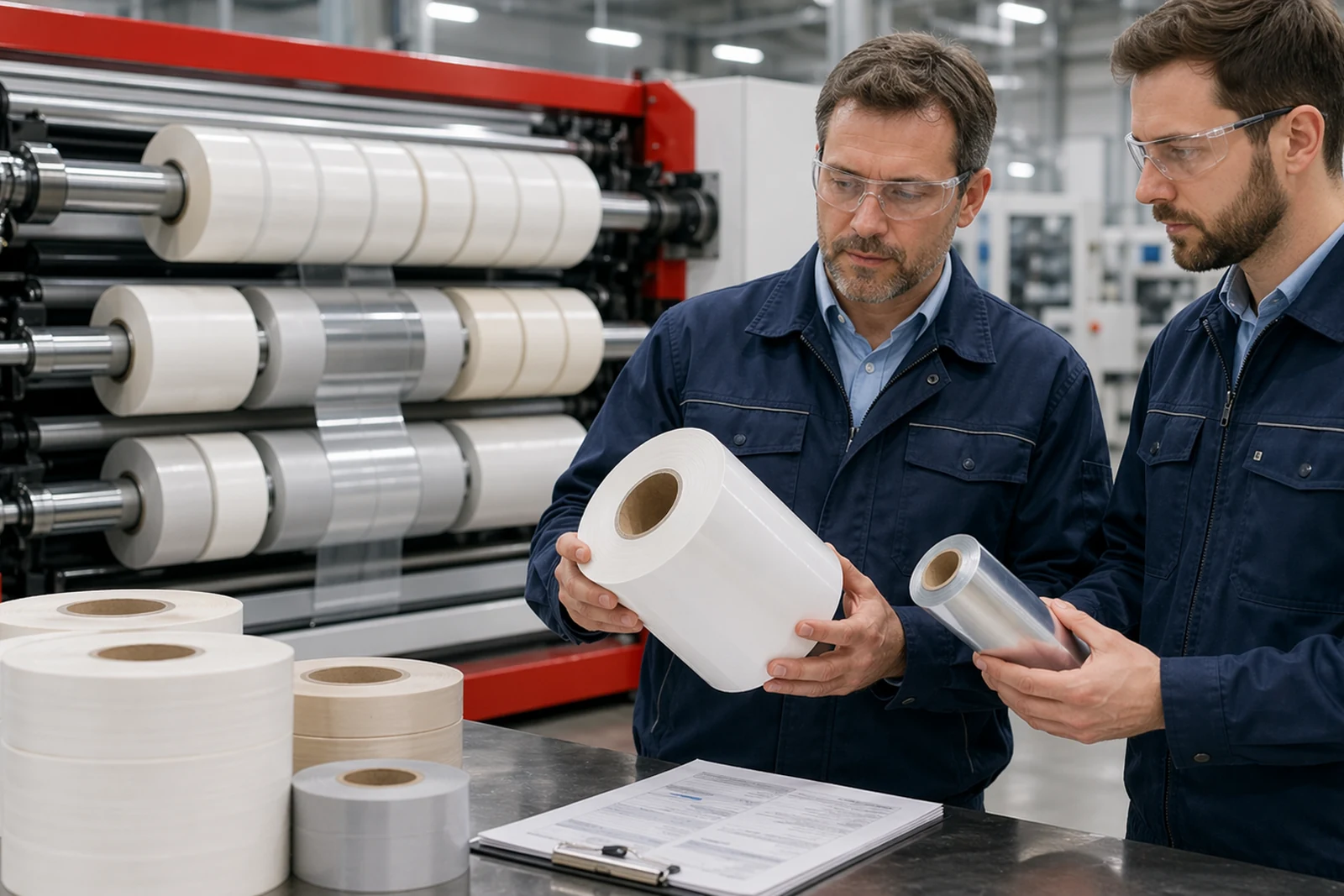
Good RFQs mix numbers with production context. Include slit pattern sheets, sample photos, and the defect or output pressure that is driving the project so the first recommendation is closer to the real job.
Simple RFQ Template You Can Copy
Material:
Material structure:
Thickness range:
Mother roll width:
Unwind diameter:
Finished roll widths:
Finished roll diameter:
Core size:
Target speed or output:
Main problem to solve:
Special options:
Power supply or factory limits:
Destination country:
Common RFQ Mistakes That Slow Quotation
- Sending only one finished width when the real production uses many slit patterns
- Saying “need high speed” without clarifying edge quality or rewind quality targets
- Omitting unwind or rewind diameters
- Naming the material too loosely without structure or thickness range
- Saying “same as current machine” without photos or actual production data
- Skipping the main defect that is driving the project, such as burr, telescoping, or unstable rewind
Before You Send The Inquiry
Check that the RFQ includes the real working range, the common slit pattern, the main quality concern, and any plant limitation that could affect machine layout. If one or two values are still open, give the best current range and say which point is still under review. That is still enough to begin useful discussion.
Ready To Send Your Inquiry?
Send your specifications using the quotation button below. If you need help defining the material range or machine requirements, review our application and capability guides or include your questions with the inquiry.
Ask for a Quick Quote Materials & Applications Slitting Capabilities
What Makes A Useful First Email
A useful first email is short but specific. It does not need to explain the whole factory, but it should identify the material, thickness range, mother roll width, unwind diameter, finished roll widths, finished roll diameter, core size, and the main problem to solve. If the buyer attaches photos of current rolls or a slit pattern sheet, the first reply can usually move straight to machine direction instead of basic clarification.
The buyer should also say what matters more in this project: better slit quality, stronger rewind stability, faster changeover, higher output, or a combination. That single sentence helps prioritize the recommendation and makes the quotation more relevant.
- Use a subject line that names the material and application
- Attach photos when the defect is visual
- State the destination country early
- Mark any values that are still estimated
If the inquiry is still missing one or two dimensions, say which values are estimated and which values are fixed. That keeps the first discussion accurate enough to move forward while making it clear where the quotation may need adjustment later.
It also helps to note your expected purchase timing, because urgency can change how the quotation is structured and reviewed.